In this guide
Quick answer
Soak parsley seed in warm water for 12-24 hours, then sow it 1/4 inch deep indoors 8-10 weeks before your last frost, or outdoors 2-3 weeks before it. Keep the soil evenly damp and expect sprouts in 2-4 weeks. Plant 8-10 inches apart in sun or light shade, and harvest the outer stems at the base once plants have 10 or more stems.
Parsley has a reputation for being hard to grow from seed. It isn't hard, just slow. The seed coat contains compounds that hold back sprouting, and most failures come from people giving up or letting the soil dry out during the long wait.
Flat leaf or curled?
| Italian Flat Leaf | Triple Curled | |
|---|---|---|
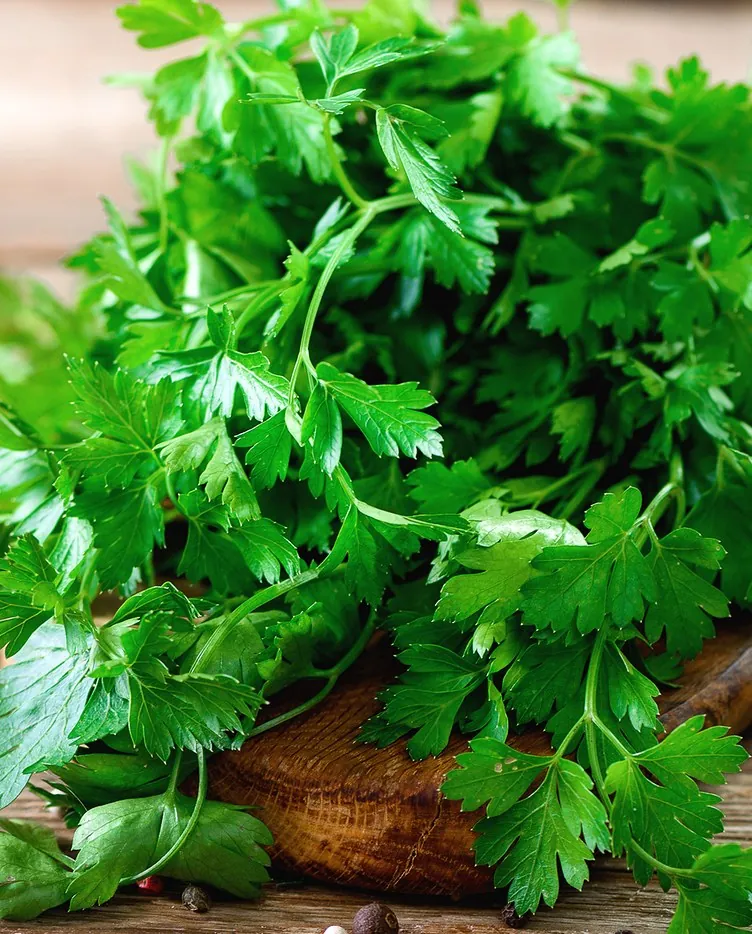
| Leaves | Flat, deeply cut, like celery leaves | Tightly curled and frilly |
| Flavor | Stronger, more savory | Milder, fresh and grassy |
| Best for | Cooking: sauces, soups, tabbouleh, chimichurri | Garnish, salads, chopping fine |
| Plant size | Taller, about 12-18 inches | Compact, about 8-12 inches |
| Good to know | Easier to chop and wash | Holds up well in pots and edging |
Both are biennials grown as annuals. The first year they make leaves. If a plant survives the winter, it sends up a flower stalk the second spring and the leaves turn tough and bitter, so most gardeners sow fresh parsley every year.
When to sow parsley
- Indoors: 8-10 weeks before your last frost. The long sprouting time is why it starts so early.
- Outdoors: 2-3 weeks before your last frost. Parsley handles cool soil and light frost.
- Second sowing: sow again in mid to late summer for a fall crop that often lasts into early winter. In mild climates it can keep producing through winter.
For the full indoor schedule alongside other herbs, see our herb seed-starting chart.
How to get parsley seed to sprout
- Soak the seed in warm water for 12-24 hours. Change the water once if you soak overnight. This rinses away some of the compounds that slow sprouting.
- Sow 1/4 inch deep in damp seed-starting mix, 3-4 seeds per cell or pot.
- Keep the mix evenly moist. This is the step that matters most. If the surface dries out during the first few weeks, many seeds never come up. A plastic dome or a sheet of plastic wrap helps, but remove it as soon as you see green.
- Keep it around 70°F. Parsley sprouts in cooler soil too, just more slowly.
- Wait. First sprouts usually show in 2-3 weeks, and stragglers can take up to 4. The first two leaves are narrow and grass-like; the true parsley leaves come next.
- Thin to the strongest seedling per cell by snipping the extras at soil level.
Outdoors, the same rules apply. Sow in a row, cover lightly, and water gently every day or two until seedlings are up. Some gardeners sow a few radish seeds in the row to mark where the parsley is while they wait.
Transplanting and spacing
Parsley grows a long taproot, so move it while it's young, before roots circle the bottom of the cell. Harden seedlings off for a week, then plant them 8-10 inches apart (a little closer for Triple Curled) in rich, well-drained soil.
Parsley grows best in full sun but is one of the few kitchen herbs that does well with afternoon shade, which helps in hot summers. In pots, use one at least 8 inches deep to fit the taproot.
How to harvest parsley so it keeps growing
Start picking when a plant has 10 or more stems, usually 10-12 weeks after sowing. Cut outer stems at the base, right down near the soil, and leave the inner stems to keep growing. New growth comes from the center of the plant.
- Never cut more than about a third of the plant at once.
- Don't just snip leafy tops; the bare stems left behind won't regrow leaves.
- Regular cutting keeps plants producing all season.
To store fresh parsley, stand the stems in a jar of water in the refrigerator with a bag loosely over the top. For longer storage, chop it and freeze it in ice cube trays with a little water or oil. Parsley loses much of its flavor when dried.
Problems and fixes
- Nothing sprouted after 3 weeks. Usually the soil dried out at some point, or the seed was old. Parsley seed is short-lived, so use seed within a year or two. Resow and keep the surface damp.
- Seedlings rot at the base. Too wet and cold, or poor drainage. Water from below and let the top of the mix dry slightly once seedlings are up.
- Plant flowers in its first summer. Stress from transplant shock, root-bound pots or a long cold spell can trigger early flowering. Start fresh plants; flowered parsley won't go back to making good leaves.
- Leaves yellowing. Often too little nitrogen in pots, or waterlogged soil. Feed with a balanced liquid fertilizer at half strength and check drainage.
- Striped green, yellow and black caterpillars. These are usually black swallowtail butterfly caterpillars, which feed on parsley, dill and fennel. Many gardeners plant a little extra to share, or move the caterpillars to a spare plant.
Parsley grows happily next to chives, basil and cilantro. Our kitchen herb garden guide has a simple bed layout, and parsley is also one of the better choices for windowsill herbs in winter.
Frequently asked questions
Why is parsley so slow to germinate? The seed coat contains natural compounds that hold back sprouting until enough water has washed them away. Soaking the seed and keeping the soil constantly damp both help. Even then, 2-4 weeks is normal.
Does parsley come back every year? Not usefully. Parsley is a biennial: in its second year it flowers, sets seed and dies, and the leaves get bitter once the flower stalk appears. Sow new plants each spring for the best leaves.
Can I grow parsley indoors? Yes. It tolerates lower light better than basil and grows on a bright windowsill, though a grow light gives fuller plants in winter. Use a deep pot for the taproot.